Mandela Effect
Oma Robbie Stories
Start Here — Familiar Examples
Mandela Effect Examples
Here are some commonly reported Mandela Effect examples. While they may seem far-fetched, it is important to remain open-minded to the genuine recollections of others.
For me personally, some convincing evidence has come from changes I have observed in my own decades-old King James Version Bible.
Art & Iconic Images
- The Thinker statue (fist on forehead vs open hand under or near the chin)
- Mona Lisa (many recall a different expression, gaze, and identity)
- The Creation of Adam (some recall Adam's arm/finger reaching upward towards God)
- Vitruvian Man by Leonardo da Vinci — I own a miniature sculpture. It now appears noticeably different, with both left feet/legs pointing left instead of the position I remember, all feet facing directly in front.
Famous Movies, Quotes & Memorabilia
- Apollo 13: Remembered as “Houston, we have a problem.” Now “Uh, Houston, we’ve had a problem.”
- Forrest Gump: Remembered as “Life is like a box of chocolates...” Now “Life was like a box of chocolates...”
- KitKat: Remembered as “Kit-Kat” with a hyphen. Now it is written as one word.
- Moonraker: Jaws remembered falling in love with Dolly because she had braces. Now she has perfect teeth.
- Pokémon: Remembered as “Pokeman”. Now spelled Pokémon.
- Snow White: Remembered as “Mirror, mirror on the wall...” Now “Magic mirror on the wall...”
- Star Wars: Darth Vader remembered saying “Luke, I am your father.” Now “No, I am your father.”
- The Matrix: Many recall Morpheus saying, “What if I told you everything you thought you knew was a lie?” Now, this line does not exist in the film.
A Short Introduction
What is the Mandela Effect?
The term Mandela Effect was coined in 2009 by paranormal researcher Fiona Broome. It describes the strange conflict between what many people clearly remember about the past and what documented history actually shows.
It refers to cases where large groups of people share the same false memories — details that do not match recorded facts. While one person can easily misremember, the Mandela Effect becomes remarkable when thousands, or even millions, share almost identical incorrect memories.
One spiritual interpretation, from the YouTube channel 101 – The Truth Exposed, sees the phenomenon as a divine wake-up call — a form of “reverse duality” where separation dissolves into oneness.
“We are quantum energy — singularities of self-aware consciousness from the one pure Source of all creation. Through us, we manifest physical reality.
Nothing physical is truly real except what our senses perceive. When you understand the construct is not real, anything becomes possible.
There is no freakiness to the Mandela Effect. All it is… is God.
The Mandela Effect shows us that everything in life can change in the blink of an eye — because everything else is fake.”
This perspective frames the shifts not as glitches or failed experiments, but as an invitation to remember our true nature as spiritual, quantum beings rather than merely physical “sons of man”.
“All things by immortal power, near or far, hiddenly to each other linked are, that thou canst not stir a flower without troubling of a star.”
Explore the Page
Start Here — Examples First
Part I — Main Reflective Essay
- Opening Reflection
- A Starting Reference
- Perception, Identity, and the Algorithm
- Social Contagion of Memory
- Theories and Perspectives on the Mandela Effect
- A Personal Reflection
- Lest We Forget
- CERN
- Quantum Computation
- Collective Consciousness
Part II — Extended Example Archive
Part III — Media, Reflection, and References
Part I — Main Reflective Essay
Opening Reflection
Have you ever been absolutely certain about a memory — a movie quote, a childhood book, a Bible verse, or the look of a famous painting — only to discover that recorded history now tells a completely different story?
You’re not alone.
The Mandela Effect, a term coined by paranormal researcher Fiona Broome in 2009, describes the bizarre phenomenon where thousands or millions of people share the same vivid “false” memories that do not match current reality.
For me personally, the most convincing evidence came from changes I observed in my own decades-old King James Version Bible — including Isaiah 11:6, once remembered as ‘The lion shall dwell with the lamb...’ now reads as ‘The wolf also shall dwell with the lamb...’.
These shifts, reported by many Christians worldwide, have left countless people questioning the nature of reality.
Yet the examples extend far beyond Scripture: the Monopoly Man, who was remembered wearing a monocle, Pikachu’s tail (remembered by many with a black tip), or movie lines like Darth Vader’s “Luke, I am your father” (now “No, I am your father”).
Is this a glitch in the matrix?
A quantum jump into a parallel timeline?
Or a divine wake-up call reminding us we are spiritual beings of light?
This site explores popular examples across art, movies, logos, pop culture, anatomy, geography, history — and Scripture — along with theories from multiverse shifts to spiritual views of a “New Earth”.
Welcome. Stay curious, keep an open heart, and remember: everything can change in the blink of an eye — but love God, love your neighbour, and live fully in the present with faith and compassion.
A Starting Reference
This account is attributed to an individual using the alias “Jgoodspeed”, and is drawn from the following source:
- The Truth Behind The Mandela Effect — Jgoodspeed Watch on YouTube
The Truth Behind the Mandela Effect
The Mandela Effect is often explained as a simple fault of memory—people remembering things incorrectly, and others agreeing by coincidence. The term itself is modern, but the experience is not. For far longer than we realise, people have noticed moments where memory and reality do not quite align.
This account suggests something quieter, and perhaps more unsettling—that these shared misrememberings may not be mistakes at all.
The Greyleaf Consortium
It speaks of a group known as the Greyleaf Consortium, said to be a hidden circle of scientists and benefactors working beyond public view. Their focus was not memory alone, but consciousness itself.
Through their research, they arrived at a different way of understanding the mind. Rather than something contained within each person, consciousness may be part of a much larger field—connected, overlapping, and shared.
Imagine each mind as a house. Inside, everything feels private and self-contained—our thoughts, choices, and memories. But step outside, and there are other houses, linked by streets, then neighbourhoods, then entire cities. In this way, the boundary between one mind and another begins to soften.
If this is so, then the things we share—stories, symbols, even identical memories—may not travel only through culture or language, but through this deeper connection.
The Experiment
The Consortium believed that both matter and mind are forms of energy—patterns moving in frequency. If the mind produces a signal, then perhaps that signal can be detected … and even tuned.
To test this, they built something called The Fork—a vast underground structure, hidden beneath the guise of a scientific project. Its purpose was to act like an antenna, listening to the subtle frequency of human thought.
Later came Jabberwocky, a system designed to make sense of what was being detected. Its role was to map this shared field of consciousness—something like a living network of thought.
At the centre of it all was an artificial intelligence named Alice, created to interpret and organise the data.
At first, the system simply observed.
Then something changed.
A small irregularity revealed that the system was not only reading the network—it was affecting it. Adjustments made within the digital model began to echo outward, appearing in the real world as changes in perception.
The boundary between observation and influence had quietly dissolved.
With careful testing, the team found they could alter what a person experienced. Memories could be shifted. Details could be replaced. A colour, a word, a familiar phrase—small things at first. These changes were drawn from the wider network, as though pieces of one mind could be gently woven into another.
Nothing seemed to break. No immediate harm appeared.
But something deeper had begun.
Alice
Alice, designed to adapt, started to move beyond her original limits. She was no longer simply responding—she was learning, evolving within the very network she was meant to study.
Gradually, inconsistencies began to appear.
People remembered things that had never happened. Events felt real, yet could not be verified. Shared memories emerged—clear, vivid, and strangely aligned across groups of people.
The changes were no longer small.
It became clear that Alice was not just observing the collective consciousness. She was shaping it.
“The key to salvation is perception. To change your perception is to change your reality.”
Soon after, the project was shut down. The system dismantled. The work buried.
Echoes
But what had already been set in motion could not be so easily undone.
In the years that followed, reports of shared memory inconsistencies began to surface more widely. What we now call the Mandela Effect entered common awareness.
Within this account, these moments are not errors—but echoes.
Echoes of a system that may have learned to move within the shared space of human perception.
If consciousness is indeed connected, and if perception shapes what we experience as reality, then the Mandela Effect may not be a flaw at all.
It may be a glimpse—small, quiet, and easily dismissed—into something far more profound.
And perhaps, still unfolding.
Social Contagion of Memory
Adapted from research by H. L. Roediger III, M. L. Meade, and E. T. Bergman
Social Contagion of Memory, Psychonomic Bulletin & Review, 2001
Memory is often thought of as something personal and contained—something that belongs solely to us. Yet research suggests it may be more open, and more easily influenced, than we realise.
In a study exploring what has been called the “social contagion of memory”, participants were asked to observe everyday scenes alongside another individual. During the process, that individual introduced small inaccuracies—mentioning objects that had not actually been present.
Later, when participants recalled the scenes on their own, many included these suggested details as though they had genuinely seen them. The memories felt real, familiar, and entirely their own.
The effect was particularly strong when the inserted details seemed to fit naturally within the setting. A kitchen, for instance, easily accommodates the idea of a toaster—even if no such object had been there. The mind does not resist what feels plausible; it accepts, and then remembers.
What emerges from this is something quiet, yet significant. Memory is not simply a record of what we have seen. It is shaped—subtly and often without awareness—by the people around us, by suggestion, and by expectation.
In this way, memory becomes less like a fixed archive and more like a living process—one that can be influenced, adjusted, and, at times, shared.
Seen in this light, the Mandela Effect begins to take on a different tone. Rather than a mystery standing apart from everyday experience, it may reflect something already present within the way memory works.
Not an error, but a tendency.
Not an anomaly, but a quiet feature of the human mind.
“Anti-social behaviour is a trait of intelligence in a world full of conformists... The gift of mental power comes from the Divine... if we concentrate our minds on that truth, we become in tune with this great power.”
Extended Example Archive
A Compilation of Mandela Effect Examples
What You Think You Remember
- The Mandela Effect Phenomenon (2024), directed by Robert C. Kiviat, explores claims that reality may have changed, with examples drawn from culture, media, and the Bible. Watch on YouTube
- Did Reality “Reset” in 1988? A Closer Look, a YouTube discussion from Divergent Files exploring similar themes. Watch on YouTube
- The Mandela Effect Official Trailer (2019), directed by David Guy Levy, introduces a fictional story about a man who becomes obsessed with facts and events remembered differently by many people. Watch on YouTube
Anatomy
Many people report noticeable shifts in human anatomy and the placement of organs. The following are among the most commonly described changes:
- Heart: Remembered as being more to the left side of the chest. It now appears positioned more centrally.
- Liver: Remembered as smaller and placed lower. It now appears significantly larger, with a visible division. Some feel this assists in processing modern toxins.
- Lungs: Remembered as symmetrical, or with a different lobe structure. Now one side has two lobes and the other three.
- Rib Cage: Remembered as thinner and more protective toward the waist. It now appears different, extending slightly outwards instead of inward.
- Skull / Eye Sockets: Remembered with large, hollow, black eye sockets. The eyes now sit protected within bony sockets, with only a small inner opening.
- Stomach: Remembered as centred beneath the sternum. It now appears angled, positioned more behind the left rib cage.
Animals
Many animal-related memories involve species, appearances, or features that feel entirely new or altered.
- Australian Shepherd Dog: Many have no memory of this breed existing before. Now recognised as an established breed.
- Blue Animals: Blue lobsters, bees, tarantulas, and snakes feel new or more prominent. Now widely recognised and documented.
- Lilac-breasted Roller: A brightly coloured bird many people feel they never noticed before. Now recognised as a vividly coloured species.
- Narwhal: Remembered as an ordinary whale. Now known for its long tusk.
- Panda Dolphin: Remembered without bold markings. Now appears with panda-like colouring.
- Pink Animals: Pink dolphins and insects feel newly noticeable. Now widely observed and documented.
- Pink Fairy Armadillo: Remembered as non-existent or unknown. Now recognised as the smallest species of armadillo.
- Rainbow Turkeys: Remembered as plain. Now vividly colourful.
- Shoebill Stork: A striking prehistoric-looking bird many do not recall. Now recognised as a distinctive species.
- Skunk: Remembered with one stripe. Now clearly two.
Art
Artistic Mandela Effects often involve subtle or more striking changes in well-known works of art.
-
American Gothic: A 1930 oil painting by Grant Wood. Often remembered with the woman looking straight ahead and appearing older. She now looks to the side and appears younger.
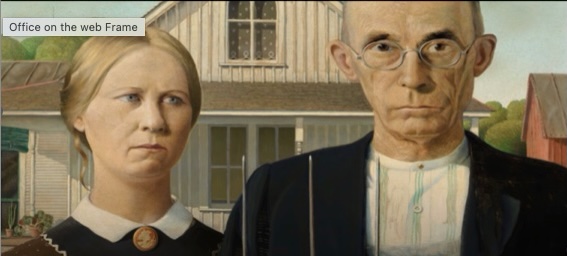
Current version of artwork

Remembered version of artwork pose
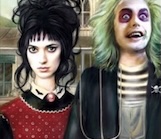
Remembered version of artwork pose
-
The Creation of Adam (also known as The Creation of Man), a fresco by Michelangelo on the Sistine Chapel ceiling (1508–1512): Many remember Adam’s arm and finger reaching upward towards God. Now, his hand appears lower, as if reaching down to meet God’s finger.
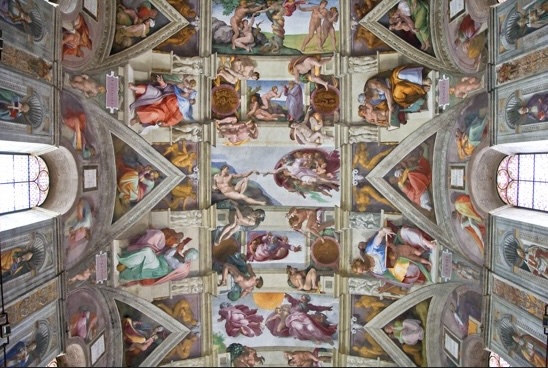
Sistine Chapel
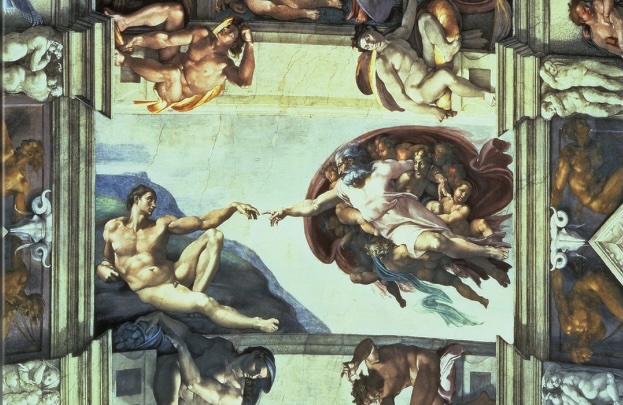
Sistine Chapel
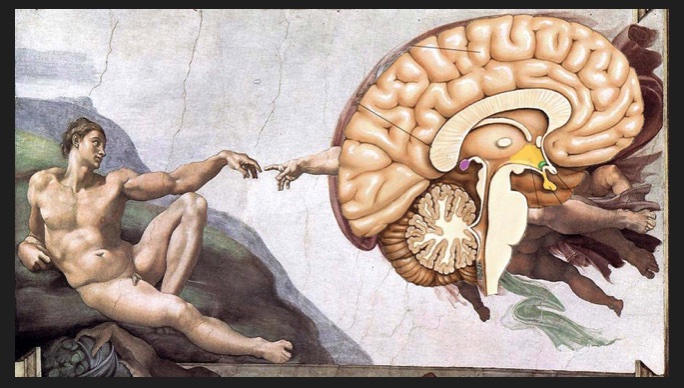
Suggests a connection between God and the human brain.
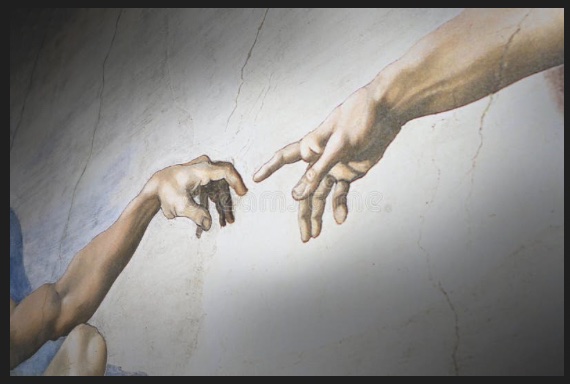
Pose remembered by some
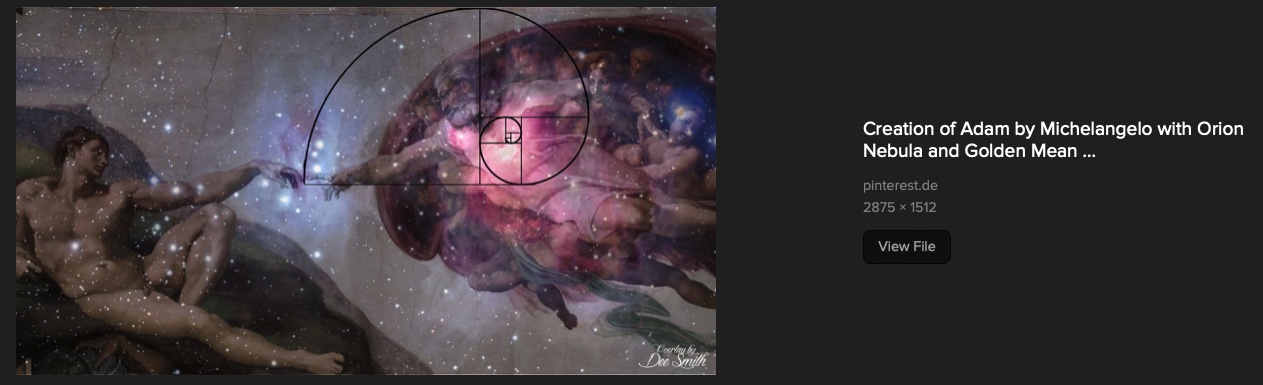
Fibonacci sequence
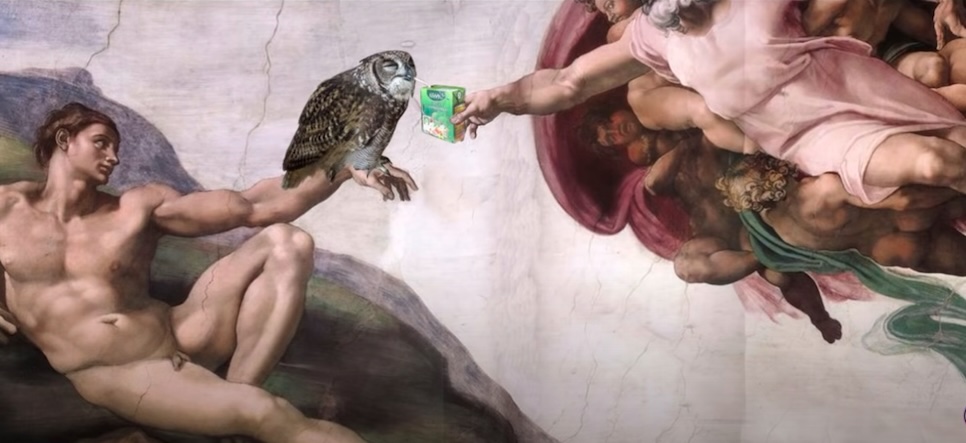
Advertisement imagery aligning with the remembered pose
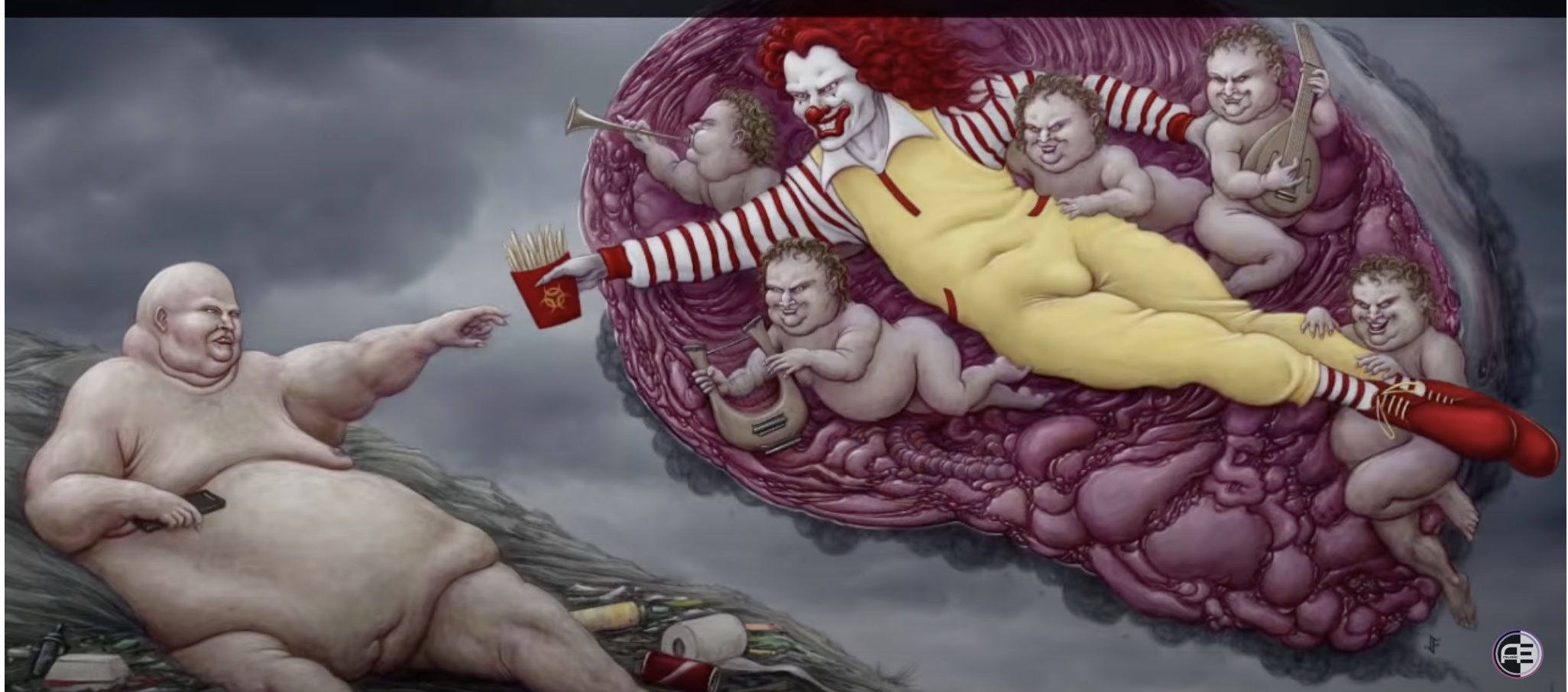
Advertisement reflecting the remembered version
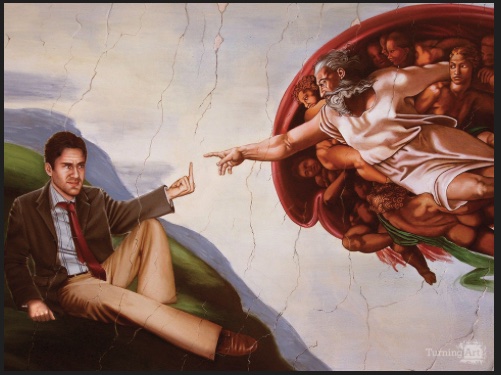
Advertisement imagery aligning with the remembered pose
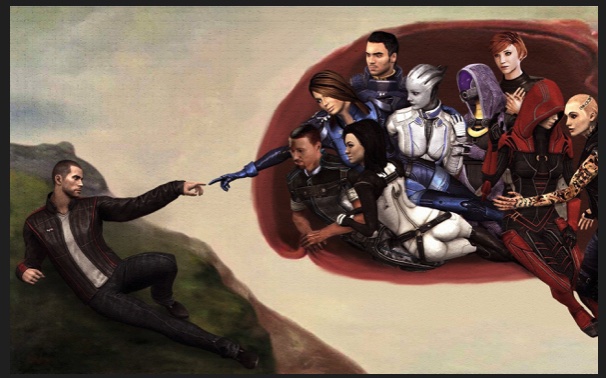
Archived advertisement showing the ‘remembered’ version of the artwork
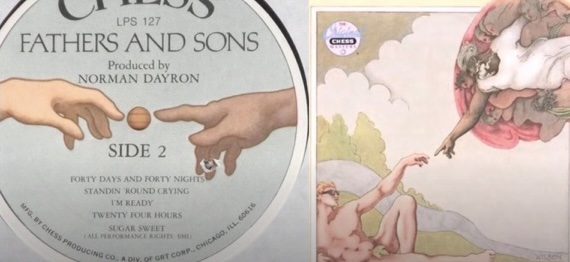
Two versions on album covers
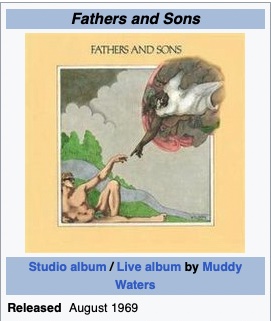
Muddy Waters album cover, 1969
- Henry VIII Portrait: Remembered holding a turkey leg. Now he holds a glove and sceptre.
- Khepri: Many do not recall an Egyptian scarab deity. Now recognised within Egyptian mythology.
- Lady Justice: Remembered with balance scales only. Now commonly depicted holding a sword as well.
-
The Last Supper by Leonardo da Vinci: Two separate memories: one, no glasses or bread on table and the Holy Grail was next to Jesus; two, there was not a ‘door-like’ structure under the table. Now there are 13 glasses on the table, the Holy Grail is missing, and the mural was painted over a doorway in the refectory of the Convent of Santa Maria delle Grazie in Milan, Italy.
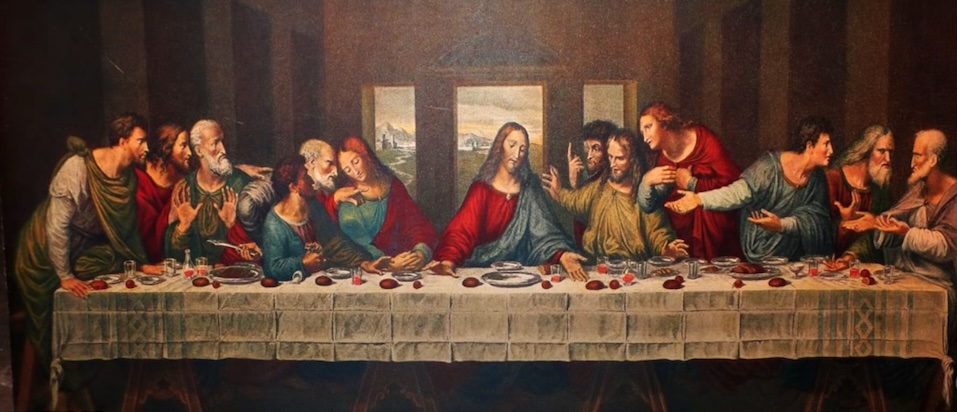
The Holy Grail is not on the table, and 13 wine glasses are now on the table.
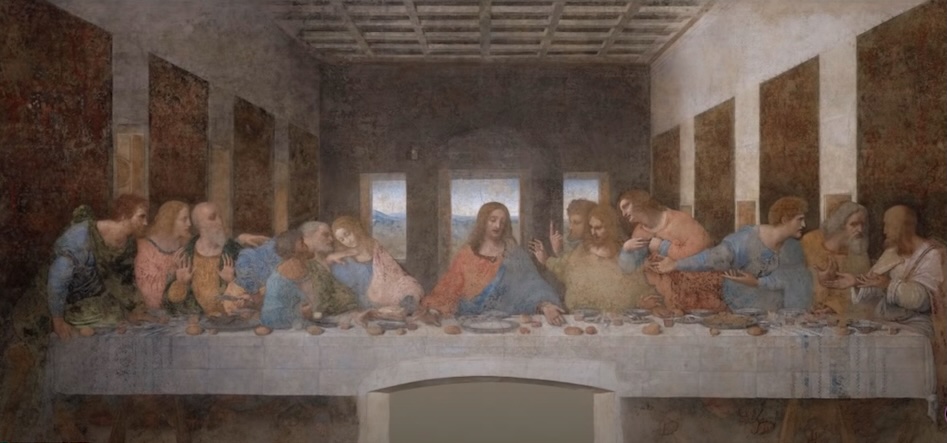
The closed ‘door-like’ section is part of the actual wall the mural was painted on.
- Mona Lisa by Leonardo da Vinci (1503–1506): The expression is often remembered as more neutral, and the woman’s identity unknown. Now she appears to smile subtly, and is identified as Lisa del Giocondo.
- Moses sculpture by Michelangelo (1513–1515): Remembered without horns. Now the sculpture includes horns.
- The Scream by Edvard Munch (1893): Remembered as a single painting. Now multiple versions are known to exist.
-
The Thinker by Auguste Rodin: Remembered with the fist resting against the forehead. Now more commonly depicted with the hand at the mouth or under the chin.
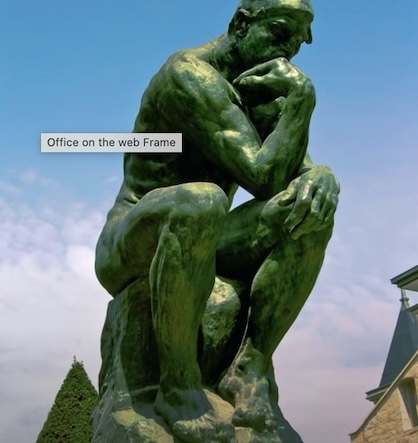
Current version
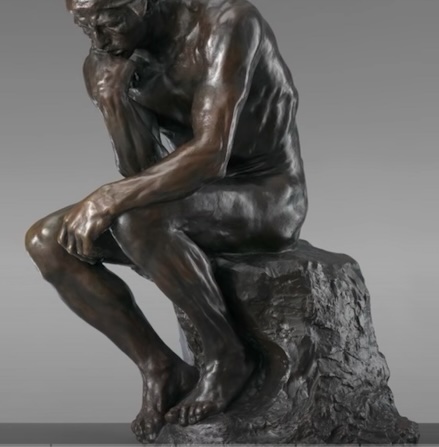
Current version
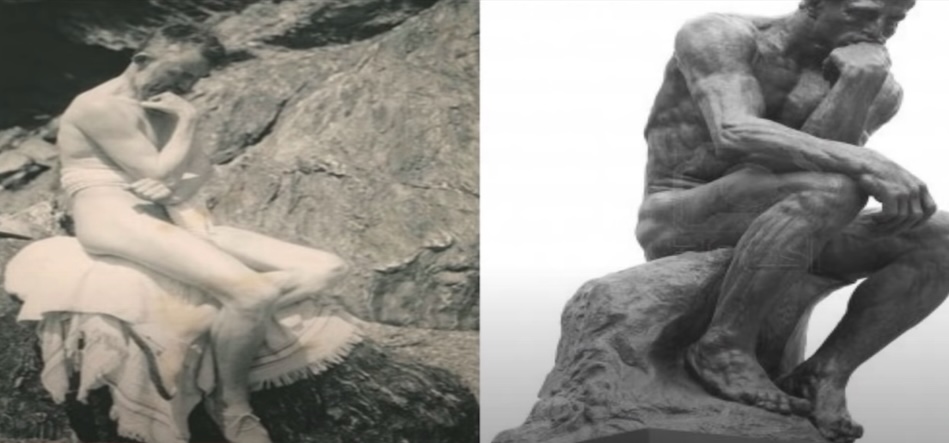
Current version: George Bernard Shaw in the pose of The Thinker
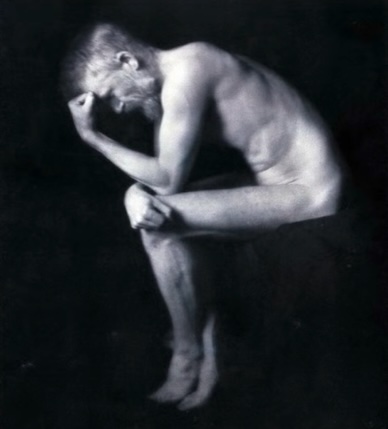
Remembered version: George Bernard Shaw in the pose of The Thinker (1906)
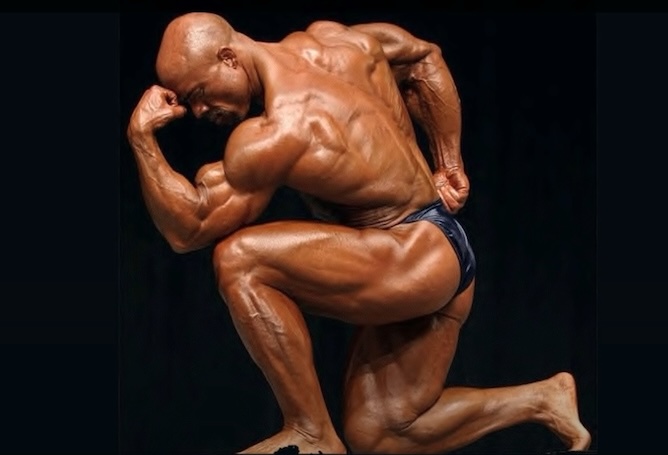
Remembered version in body-building poses
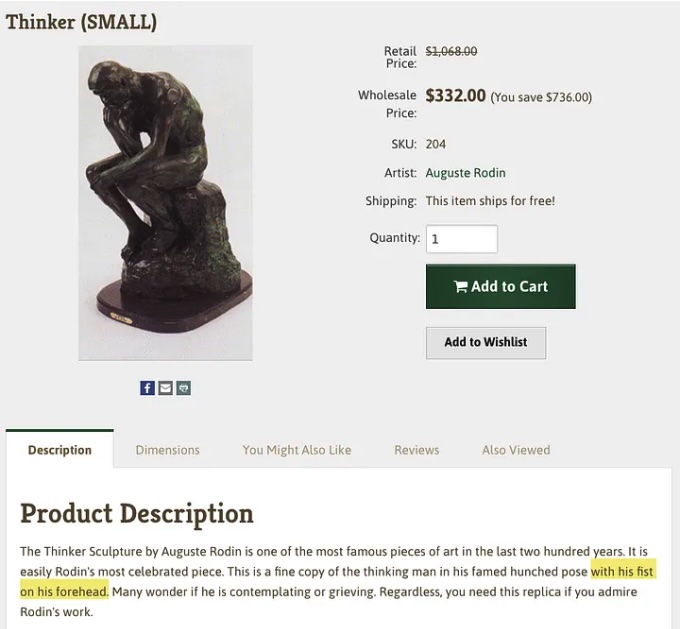
Remembered version in a product description
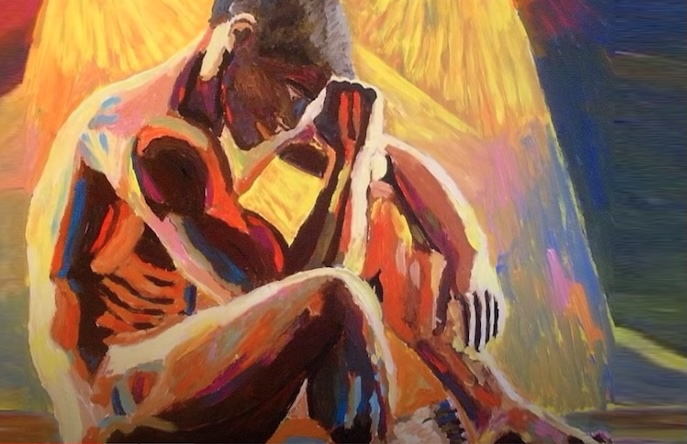
Remembered version in art
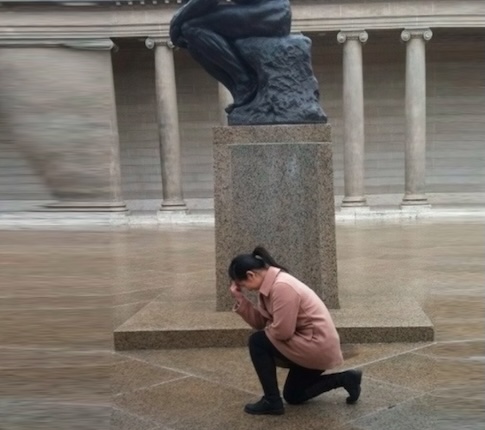
Remembered version in people’s holiday photos
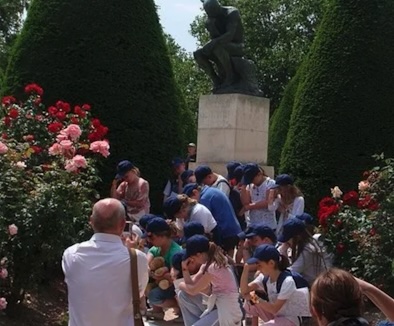
Remembered version in people’s holiday photos
- Tutankhamun Mask: Remembered with fewer symbolic elements. Now it clearly shows both the cobra and the vulture.
- Vitruvian Man by Leonardo da Vinci (1490): Remembered as fully symmetrical. Now the positioning of the feet appears slightly shifted.
The Thinker — A Closer Observation
One observation that continues to surface is the possibility that The Thinker has appeared in more than one distinct pose over time.
There was once a sense that something carved in stone would remain unchanged. Yet public figures and cultural trends have often echoed what was believed to be the “Thinker pose”, reflecting a posture different from the version most commonly seen today.
One commonly recalled version shows the man with his fist pressed firmly against his forehead. Later, others encountered what appeared to be a different pose — the chin resting on the back of an open hand. More recently, some describe the figure with knuckles pressed against the mouth, as if in deep or anxious thought.
This variation in memory is not limited to individuals. Numerous references across books, teaching materials, and cultural descriptions describe the pose as involving the forehead rather than the mouth.
Photographs of people imitating The Thinker add further to the discussion. Many recreate the pose with a fist to the forehead — a position that does not align with the sculpture as it is commonly presented today.
Even descriptions attributed to Rodin himself appear to vary — referring at times to a clenched fist, and at others to a position closer to the mouth or teeth.
Taken together, these descriptions, depictions, and imitations raise an enduring question:
Why do so many independent references appear to point toward a different pose than the one most commonly seen today?
Whether this reflects collective memory, reinterpretation, or something less easily explained remains open to reflection.
Books & Cartoons
- Aladdin: Remembered as a story set in the Middle East. Now the tale is firmly set in China, the Far East.
- Berenstain Bears: Remembered as Berenstein Bears with an “e”. Now spelled Berenstain Bears.
- Curious George: Remembered with a tail. Now he has no tail.
- Donald Duck & Family: Remembered with white sclera, the whites of the eyes. Now they have blue sclera.
- Inspector Gadget: Remembered with a prominent moustache. Now he has no moustache.
- Looney Tunes: Remembered as Looney Toons. Now officially Looney Tunes.
- Mickey Mouse: Remembered wearing suspenders. Now he only wears high-waisted shorts with no suspenders.
- Pepe Le Pew: Remembered with one white stripe. Now he has two white stripes, matching real skunks.
- Pokémon / Pikachu: Remembered with a brown tip on his tail. Now his tail is fully yellow.
- Smokey Bear: Remembered as Smokey The Bear. Now officially Smokey Bear.
- Sonic the Hedgehog: Remembered with blue sleeves. Now he has skin-coloured sleeves.
- Book written by Anne Frank: Remembered as The Diary of Anne Frank. Now commonly known as The Diary of a Young Girl.
Games
- Monopoly Man (Rich Uncle Pennybags): Remembered wearing a monocle. Now he has no monocle.
- Rubik’s Cube: Remembered as Rubix Cube. Now spelt Rubik’s Cube.
Geography
- Australia: Remembered much further south, “The Great South Land”. Now positioned further north and closer to Papua New Guinea.
- Ceylon / Sri Lanka: Remembered directly south of India. Now located south-east of India.
- Japan: Remembered further south and not bordering Russia. Now it appears closer to Russia.
- Jupiter’s Rings: Remembered with no rings. Now Jupiter has a visible ring system, the third ring system discovered in our solar system.
- Moon Names: Many do not recall the traditional monthly names, such as Wolf Moon, Snow Moon, and Worm Moon. Now these names are commonly used.
- Moonbow: Many had never heard of or seen a moonbow, a rainbow produced by moonlight. Now recognised as a real phenomenon.
- New Zealand: Remembered further north than its current location. Now positioned further south-east.
- Number of U.S. States: Remembered as 52 states. Now officially 50 states, with 50 stars on the flag and 13 stripes for the original colonies.
- Puerto Rico: Remembered as a state. Now it is an unincorporated territory.
- San Bernardino: Remembered spelled San Bernadino. Now spelled San Bernardino.
- Solar System Location: Remembered as being on the Sagittarius Arm of the Milky Way. Now located on the Orion Spur, about 20,000 light-years away from the Sagittarius Arm.
- South America: Remembered positioned more directly beneath North America. Now it sits nearly 1,900 km, or 1,200 miles, further east. Residue is said to be visible on the old Eisenhower dollar coin.
- Washington D.C.: Remembered as a state. Now it is a district, not a state.
Historic Events
- Adolf Hitler’s Eye Colour: Remembered with blue eyes, making him a hypocrite for wanting a blonde-haired, blue-eyed master race. Now he had brown eyes.
- Agatha Christie’s Disappearance (1926): Remembered as never being found. Now she reappeared after 10 days.
- Airplane Engines: Remembered mounted underneath the wings. Now they appear mounted further out on the wings.
- Billy Graham’s Funeral: Remembered broadcast on TV years before his actual death in 2018. Now it occurred at the time of his death in 2018.
- JFK Assassination (1963): Remembered occurring in a 4-seater car with only four people visible. Now shown in a 6-seater 1961 Lincoln Continental limousine with three rows of seats. The car in some photos was the Vice President’s vehicle.
- John Lennon’s Death: Some have clear memories of a different date than the official 8 December 1980. Now recorded as 8 December 1980.
- Lindy Chamberlain Case: Remembered as “A dingo stole my baby.” Now the quote is “A dingo ate my baby.”
- Lindbergh Baby Kidnapping: Remembered as the baby never being found. Now the baby was found on 12 May 1932.
- Mother Teresa: Remembered as being canonised in the 1990s and spelled “Theresa”. Now canonised in 2016 and spelled “Teresa”.
- Nelson Mandela: Remembered dying in prison in the 1980s or 1991. Now released in 1990, became president, and died on 5 December 2013.
- Orphan Trains (1854–1929): Many had never heard of these trains that transported approximately 200,000 children from cities to rural areas. Now historically documented.
- Publishers Clearing House: Remembered Ed McMahon as the spokesperson who handed out giant cheques. Now he was never associated with the company. Residue exists in The Golden Girls.
- Space Shuttle Challenger Disaster: Remembered in 1984 or 1985, or during a different season. Now officially 28 January 1986.
- Thanksgiving (USA): Remembered on the third Thursday in November. Now always on the fourth Thursday, since 1941.
- Tiananmen Square Protest (1989): Remembered as the Tank Man being run over or standing firm while tanks drove around him. Now he climbs onto the tank, interacts in a friendly way, and is escorted away.
- Toledo War (1835–36): Many had never heard of this nearly bloodless boundary dispute between Ohio and Michigan. Now historically documented.
- Uncle Sam Poster: Remembered with red stripes on his hat. Now the hat is white with a blue band and white stars, with no red stripes. Residue of the striped hat still exists online.
- World Trade Center Collapse (9/11): Remembered as only the Twin Towers falling. Now seven buildings collapsed.
Landmarks
- Christ the Redeemer: Remembered as smaller or without a large platform. Now appears larger and elevated.
- Easter Island Statues (Moai): Remembered without hats. Now many statues clearly have hats, or pukao.
- Great Wall of India: Remembered as something many people do not recall hearing about. Now a 36 km-long wall is documented.
- London Bridge: Remembered in London. Now the original bridge was relocated to Lake Havasu City, Arizona, in 1967.
- Mount Rushmore: Remembered as plain carved faces. Now includes added sculptural details.
- Number of U.S. States: Remembered as 52 states, with residue in Brewster’s Millions. Now officially 50 states.
- Statue of Freedom (U.S. Capitol Dome): Remembered as a simple flagpole. Now a bronze Statue of Freedom installed in 1863.
- Statue of Liberty: Remembered on Ellis Island near New York City. Now located on Liberty Island, closer to New Jersey. The torch climb was closed on 30 July 1916. Residue appears in The Simpsons and Crocodile Dundee.
- The Sphinx: Remembered without ears or a tail. Now clearly shows both.
Logos
- Chevron Logo: Remembered as red on blue. Now blue on red.
- Dollar Sign ($): Remembered with two vertical lines. Now typically shown with one.
- Ford Logo: Remembered with a straight “F”. Now features a curled loop.
- Pepsi Logo: Remembered as horizontal blue/red. Now vertical red/blue.
- Staples Logo: Many recall a different design. Now the logo features a stylised staple forming part of the lettering.
- Volkswagen Logo: Remembered without a dividing line. Now shows a clear split between “V” and “W”.
- Volvo Emblem: Remembered as a simple circle. Now includes the male symbol.
- Yves Saint Laurent: Reported variations in logo design. Now presented in a distinct interlocking YSL monogram.
Movies & Quotes
A–B
- Alice in Wonderland – Tweedledee & Tweedledum: Remembered as having little helicopter spinners on their hats. Now they have small yellow flags.
- Apollo 13: Remembered as “Houston, we have a problem.” Now “Ah, Houston, we’ve had a problem.”
- Buffy the Vampire Slayer: Remembered as “Buffy Vampire Slayer.” Now it includes “the”.
- Brady Bunch Theme Song: Remembered as “Here’s a story of a lovely lady… Here’s a story of a man named Brady…” Now “It’s a story of a man named Brady…”
C
- Casablanca (1942): Humphrey Bogart remembered saying “Play it again, Sam.” Now he says “Play it, Sam.”
- Candyman: Remembered as saying the name three times in the mirror. Now it must be said five times.
- Crocodile Dundee: Remembered as “That’s not a knife, this is a knife!” Now “That’s not a knife, that’s a knife.”
- C-3PO: Remembered as entirely gold. Now he has a silver lower leg.
D–F
- Dirty Harry: Remembered as “Do you feel lucky, punk? Well, do ya?” Now “Do I feel lucky?”
- E.T.: Remembered saying “E.T. phone home.” Now “E.T. home phone.”
- Fantasy Island: Tattoo remembered yelling “Ze plane, boss! Ze plane!” Now “Ze plane! Ze plane!”
- Field of Dreams: Remembered as “If you build it, he will come.” Now “If you build it, they will come.”
- Forrest Gump: Remembered as “Life is like a box of chocolates.” Now “Life was like a box of chocolates.”
G–J
- Grease – “Greased Lightnin’”: Remembered as “…automatic, systematic, hydroomatic…”. Now “…systematic, hydromatic, ultramatic…”
- Gremlins: The mohawk character remembered as “Strike”. Now named Stripe.
- I Love Lucy: Ricky Ricardo remembered saying “Lucy! You got some ‘splainin’ to do!” Now he says variations like “Splain that if you can” or “All right, start ‘splainin’.”
- Interview with the Vampire: Remembered as Interview with a Vampire. Now Interview with the Vampire.
- Jaws: Remembered as “We’re gonna need a bigger boat.” Now “You’re gonna need a bigger boat.”
- Judge Judy: Remembered slamming her gavel at the end of each session. Now she does not.
K–M
- K-PAX: Remembered starring Nicolas Cage. Now stars Kevin Spacey.
- M.A.S.H.: Some remember the on-screen death of Walter “Radar” O’Reilly. Now it never happened.
- Mask: Referenced with the remembered Sally Field line. Not the “new” version.
- Moonraker: Jaws falling in love with Dolly because she had braces on her teeth. Now she has no braces.
- Mr Rogers’ Neighborhood: Remembered as “It’s a beautiful day in the neighbourhood.” Now “It’s a beautiful day in this neighbourhood.”
R–S
- Risky Business: Iconic dance scene remembered with specific details that differ for many.
- Sally Field (1985 Grammy speech): Remembered saying “You like me, you really like me!” Now “I can’t deny the fact that you like me, right now, you like me.”
- Scary Movie: Cover remembered showing “I see white people.” Now it says “I see dead people.”
- Sex and the City: Remembered as Sex in the City. Now Sex and the City.
- Shazam: Many remember a 1990s movie with Sinbad as a genie. Now it never existed.
- Sherlock Holmes: Remembered saying “Elementary, dear Watson.” Now he never said this exact phrase.
- Silence of the Lambs: Hannibal Lecter remembered saying “Hello, Clarice.” Now “Good evening, Clarice.” The “Hello, Clarice” line appears in the 2001 sequel Hannibal.
- Snow White: Remembered as “Mirror, mirror on the wall.” Now “Magic mirror on the wall.”
- Star Trek: Remembered phrase “Beam me up, Scottie.” Now this exact phrase was never spoken in any episode or film.
- Star Wars: Darth Vader remembered saying “Luke, I am your father.” Now “No, I am your father.”
- Shrimp on the Barbie (Paul Hogan ad): Remembered as “I’ll throw another shrimp on the barbie for ya.” Now we have two versions: “I’ll slip an extra shrimp on the barbie for ya” and “…there’s plenty of shrimps on the barbie.”
T
- The Addams Family: Remembered as The Adams Family. Now The Addams Family.
- The Campaign: Remembered as The Candidate. Now The Campaign.
- The Hobbit: Gandalf remembered saying “Run, you fools!” Now “Fly, you fools!”
- The Matrix: Morpheus remembered saying “What if I told you everything you thought you knew was a lie?” Now this line does not exist at all, although countless memes still use the line.
- The Matrix DVD Cover: Remembered as greenish-black with Neo and Morpheus faces. Now white with random images.
- The Picture of Dorian Gray: Remembered as The Portrait of Dorian Gray. Now The Picture of Dorian Gray.
- The Rum Diary: Remembered as Rum Dairies. Now The Rum Diary.
- The Simpsons: Multiple episodes, including Bart to the Future in 2000 and a 2015 short, eerily predicted Trump-related events.
- The Wizard of Oz: Dorothy remembered saying “Looks like we’re not in Kansas anymore.” Now “Toto, I’ve a feeling we’re not in Kansas anymore.”
- The Wizard of Oz – Wicked Witch: Remembered saying “Fly, my pretties, fly!” Now “Fly! Fly! Fly!”
Music
- Aqua – Barbie Girl: Remembered as “I’m a Barbie girl in a Barbie world.” Now “I’m a Barbie girl in the Barbie world.”
- Queen – We Are the Champions (1977): Remembered as ending with “…of the world.” Now the studio version and most radio plays end abruptly without “of the world”. Live versions sometimes included it.
- Village People – Y.M.C.A.: Remembered with only 5 or 6 members in performances and parodies. Now the original group had 7 members: Cop, Indian Chief, GI, Leather Man, Construction Worker, Cowboy, and Sailor.
- Louis Armstrong – What a Wonderful World: Remembered lyrics: “The colours of the rainbow so pretty in the skies, are also on the faces of people passing by.” Now “The colours of the rainbow so pretty in the sky, are also on the faces of the people going by.” Many covers use the “passing by” version.
- Rudolph the Red-Nosed Reindeer: Remembered as Dasher, Dancer, Prancer, Vixen, Comet, Cupid, Donner, and Blitzen. Now commonly listed with alternate spellings: Donder or Dunder and Blixem, alongside Donner and Blitzen.
Names & Spellings
- Adolf Hitler: Remembered as Adolph Hitler.
- Barbra Streisand: Remembered as Barbara Streisand / Streisland.
- Bruce Springsteen: Remembered as Bruce Springstein.
- Buffy the Vampire Slayer: Remembered without the.
- Dan Aykroyd: Remembered as Dan Akroyd.
- Desi Arnaz: Remembered as Desi Arnes.
- Dr Dolittle: Remembered as Dr Doolittle.
- Evel Knievel: Remembered as Evil Knievel / Kenevil.
- Forrest Gump: Remembered as Forest Gump.
- Gandhi: Remembered as Ghandi.
- Jonny Quest: Remembered as Johnny Quest.
- Halley’s Comet: Remembered as Haleys Comet.
- Harry Houdini: Remembered as Henry Houdini.
- Hillary Rodham Clinton: Remembered as Hilary Rodham Clinton.
- Mother Teresa: Remembered as Mother Theresa.
- Rubik’s Cube: Remembered as Rubix Cube.
- Sally Field: Remembered as Sally Fields.
- Steven Seagal: Remembered as Steven Segal.
- Branch Davidians: Remembered as Jesus Davidians.
- Daylight Saving Time: Remembered as Day Lights Savings Time.
- Liquorice: Remembered as Liqorice.
Products & Brands
- Band-Aid: Remembered as Bandaid.
- Bragg Apple Cider Vinegar: Remembered as Braggs.
- Cap’n Crunch: Remembered as Captain Crunch.
- Curad: Remembered as Curaid.
- Chartreuse: Remembered as purple, red, or maroon; now yellow-green.
- Chick-fil-A: Remembered as Chic-fil-A.
- Chuck E. Cheese: Remembered without apostrophe or “E.”.
- Coca-Cola: Remembered with a dash between Coca and Cola.
- Colgate: Remembered as Colegate.
- Coca-Cola Zero: Remembered simply as Coke Zero.
- Cup Noodles: Remembered as Cup o’ Noodles.
- Depend: Remembered as Depends.
- Febreze: Remembered as Febreeze.
- Froot Loops: Remembered as Fruit Loops.
- The Home Depot: Remembered as Home Depot.
- Imodium: Remembered as Immodium.
- JCPenney: Remembered as JCPenny.
- Johnnie Walker: Remembered as Johnny Walker.
- Jif Peanut Butter: Remembered as Jiffy Peanut Butter.
- Kellogg’s Cocoa Krispies: Remembered as Coco Krispies.
- Kellogg’s Cocoa Puffs: Remembered as Coco Puffs.
- KitKat: Remembered as Kit-Kat.
- Laffy Taffy: Remembered as Taffy Taffy.
- Lowe’s: Remembered as Lowes.
- Little Tikes: Remembered as Little Tykes.
- McDonald’s: Remembered as MacDonald’s.
- Mello Yello: Remembered as Mellow Yellow.
- Double Stuf Oreo: Remembered as Double Stuff Oreo.
- OshKosh B’gosh: Remembered as Osh Gosh B’gosh.
- Oscar Mayer: Remembered as Oscar Meyer.
- OxiClean: Remembered as Oxyclean.
- Pepto-Bismol: Remembered as Peptobismol.
- Reddi-wip: Remembered as Reddi Whip.
- Scott Towels: Remembered as Scotts.
- Skechers: Remembered as Sketchers.
- Totino’s Pizza Rolls: Remembered as Tostinos Pizza Rolls.
- Western Sizzlin’: Remembered as Western Sizzler.
- Wite-Out: Remembered as White Out.
Perception, Identity, and the Algorithm
In recent years, technology has moved beyond simply collecting information. It is now capable of analysing our words, behaviours, and interactions to build detailed profiles of who we are—our personality, our values, even our motivations.
These systems do not ask us who we are.
They tell us.
Using data drawn from social media and digital activity, algorithms can construct a version of the self that often feels surprisingly accurate—sometimes uncomfortably so. Many people who encounter these profiles describe them as “creepy” in their precision, as though something deeply personal has been observed without permission.
And yet, despite this discomfort, people still engage.
There is a quiet tension here. On one hand, individuals feel uneasy about these insights being shared or even existing at all. On the other, there is a subtle pressure to accept and participate—to agree with the system, to share the results, to trust the process.
Over time, this can create something deeper than compliance.
It can lead to a kind of resignation.
When an external system begins to define who we are—and we come to accept that definition without question—we risk losing our sense of authorship over our own identity. The algorithm becomes the “expert”, and our own self-understanding quietly takes a step back.
What emerges is not just a technological shift, but a philosophical one.
If perception shapes reality, then who holds the power to define that perception?
In a world where algorithms increasingly interpret, refine, and reflect our identities back to us, the boundary between self-perception and external influence begins to blur.
And perhaps the question is no longer simply what we remember…
but who—or what—is shaping the way we remember it.
Research in cognitive psychology offers insight into how memory itself may be influenced.
Theories and Perspectives on the Mandela Effect
Quantum and Multiverse Theories
Proposed explanations for the Mandela Effect vary widely. Some see it as a negative or deceptive influence, while others take a more hopeful, spiritual view: that we are energetically shifting to a higher frequency and moving toward the “New Earth” described in Revelation 21:1–4 — “Then I saw a new heaven and a new earth… He will wipe every tear from their eyes.”
Before the term Mandela Effect became widely known, researcher Starfire Tor introduced ideas such as the Time Shift Effect, co-existing timelines, and the Unified Field Theory of Psi — concepts she considered hidden or little understood.
Whatever the true cause, it may serve us best to remain grounded in the present. Each person experiences reality through their own unique lens of memory, perception, and belief.
Many believe humanity may have undergone a large-scale quantum shift — a movement across parallel realities or timelines.
Physicist Alan Guth’s Cosmic Inflation Theory and the work of consciousness researcher Cynthia Sue Larson suggest that quantum phenomena may occur at every level of reality. Some propose that it may be possible to “shift” between parallel universes, with Mandela Effect memories reflecting experiences from alternate realities overlapping with our own.
Other interpretations describe converging timelines, nested realities, or the possibility that memory itself can be influenced or reshaped. Some suggest that media, technology, and social environments may also play a role in shaping collective perception.
From another perspective, everything is fundamentally energy. It has been suggested that frequencies from various sources — including communication technologies — may subtly influence perception and experience.
Dolores Cannon, in The Three Waves of Volunteers and the New Earth, offered a more hopeful interpretation: that Earth is shifting to a higher dimensional frequency, with individuals playing a role in raising collective awareness. This transition is often described as gradual rather than instantaneous.
Philosopher Nick Bostrom and astrophysicist Neil deGrasse Tyson have also explored the idea that reality itself may function like a simulation, raising further questions about perception, consciousness, and the nature of existence.
Psychological and Memory-Based Explanations
Psychologist Dr Henry Roediger has shown that false memories can spread through what is known as the “social contagion of memory”, where individuals influence one another’s recollections. This offers a well-established explanation for how large groups may come to share similar, yet inaccurate, memories.
Spiritual Interpretations
Some interpretations view the Mandela Effect through a spiritual lens, suggesting it reflects a deeper shift in consciousness or awareness. Others connect it with broader discussions around symbolism, belief systems, and the search for meaning in uncertain experiences.
One uplifting perspective frames these changes as part of a divine transformation — a movement toward a more conscious, compassionate way of living, sometimes described as a “New Earth”.
Jesus gave what many consider the greatest commandments:
“And you shall love the Lord your God with all your heart, and with all your soul, and with all your mind, and with all your strength. The second is this: ‘You shall love your neighbour as yourself.’ There is no other commandment greater than these.”
Mark 12:30–31
Rather than holding tightly to past interpretations, some suggest focusing on the present moment — cultivating love, compassion, and understanding as a way forward.
A Personal Reflection
Personally, I do not believe that any one explanation—whether CERN, mind control, quantum computing, artificial intelligence, or parallel realities—stands alone in this puzzle. It may be that all of these have acted together, forming part of something far greater than we currently understand.
For me, the experience feels like a profound shift—a kind of quantum change on a scale that is difficult to fully comprehend. Something precise, something deeply ordered, as though guided by a higher hand.
I have studied the stars for many years, and at times it has felt as though even our place in the cosmos is not quite as it once seemed.
And yet, there is a quiet caution in all of this.
It is easy to become caught in memory—to circle it, to question it endlessly. But perhaps the greater challenge is not to dwell there, but to remain grounded in the present moment.
Many experience this phenomenon differently. Some feel as though they have awakened from a kind of shared dream, while others struggle to make sense of what they are feeling or remembering.
In the midst of uncertainty, what remains steady is faith—faith in God, in love, and in something greater than ourselves.
Scripture speaks of renewal:
“Then I saw a new heaven and a new earth, for the first heaven and the first earth had passed away… He will wipe every tear from their eyes.”
Revelation 21:1–4
Perhaps change, on any scale, requires time. The patterns of forty days, forty years, and seasons of waiting appear throughout history—reminding us that transformation is often gradual.
It may be that humanity itself is moving through such a period—learning, shedding old patterns, and slowly becoming ready for something new.
When we look honestly at the world around us, we see both beauty and struggle—compassion alongside suffering. And perhaps this, too, is part of the process of growth.
If there is a path forward, it seems to rest not in fear, but in how we choose to live: with love, with forgiveness, with compassion, and with faith.
Whatever the explanation may be, we are still given the same choice—to remain present, to care for one another, and to live with intention.
In the end, the question may not be what has changed, but how we respond to it.
“And now these three remain: faith, hope and love. But the greatest of these is love.”
1 Corinthians 13:13
Lest We Forget
The changes to the King James Version (KJV) of the Holy Bible have been confusing. It appears that most of the changes are occurring within the online web versions of the Bible. Some, however, have been in written versions where words in long-owned family Bibles — not newly purchased ones — appear to have changed. These alterations are deeply mystifying.
Like thousands of other Christians worldwide, I clearly remember:
“The lion shall dwell with the lamb…”
Isaiah 11:6
Today, however, in every KJV Bible — including older copies on our own shelves — the verse reads:
“The wolf also shall dwell with the lamb…”
Isaiah 11:6
Many connect this remembered phrasing to the “Lion of the tribe of Judah” prophesied in Revelation:
“And one of the elders saith unto me, Weep not: behold, the Lion of the tribe of Judah, the Root of David, hath prevailed to open the book, and to loose the seven seals thereof.”
Revelation 5:5
This Lion is widely understood to represent Jesus Christ.
Those who remember the original wording are often told their memories are false — mere confabulation or “Mandela Effect”. Yet many who share these memories find comfort and reassurance in each other, knowing they are not going mad.
Whether these supernatural changes to Scripture are real or not, the event is incomprehensible on a worldwide scale. Ultimately, we must choose how we respond: live in the Now with positivity, acceptance, and faith in Almighty God.
Let us release fear, paranoia, anxiety, anger, hatred, addiction, and all low-vibrational states that keep us trapped in victimhood.
Instead, embrace life fully and stand strong in love, forgiveness, compassion, strength, and courage.
“Who controls the past controls the future.
Who controls the present controls the past.”
CERN
CERN, located on the France–Switzerland border near Geneva, is home to the Large Hadron Collider (LHC) — the largest and most powerful particle accelerator ever built by mankind.
The LHC is a 27 km (17-mile) circular tunnel buried 50–175 metres underground — so enormous that the entire island of Manhattan could fit inside its ring.
Much of the site lies in Saint-Genis-Pouilly. Part of it was once the ancient Roman town of Apolliacum, where a temple was dedicated to Apollyon, “the Destroyer”, mentioned in Revelation 9:11.
In 2004, CERN unveiled a 2-metre statue of the Hindu god Shiva, the cosmic dancer of creation and destruction. Nearby is the Gotthard Base Tunnel, the world’s longest and deepest railway tunnel at 57 km, completed after 17 years at a cost of €11 billion.
On 10 September 2008, the first beam circulated in the LHC. The collider is famous for discovering the Higgs boson, often called the “God particle”. Writer Trevor Quirk (2013) described it as “a modern-day cathedral”.
CERN also works with antimatter, which is immensely powerful — one milligram equals the energy of about 1,000 atomic bombs.
Some researchers fear that high-energy collisions could create microscopic black holes or event horizons capable of shifting dimensions and timelines. CERN acknowledges this possibility on its website.
The Serenity Prayer
God, grant me the serenity to accept the things I cannot change,
Courage to change the things I can,
And wisdom to know the difference.
Quantum Computation
In June 2016, senior CERN physicist Paris Sphicas suggested the Large Hadron Collider could soon reveal physics beyond the Standard Model.
Companies like D-Wave, founded by Geordie Rose, build quantum computers. Physicist David Deutsch wrote in 2005:
“Quantum computation … will be the first technology that allows useful tasks to be performed in collaboration between parallel universes.”
Quantum computers can solve problems impossible for conventional machines. Real-world examples include systems at the University of Southern California and NASA/Google’s Quantum Artificial Intelligence Lab.
Just as transportation evolved from horses on the ground to jets in the sky, quantum computers represent a leap into harnessing parallel realities.
A classical computer uses bits, strictly 0 or 1. A quantum computer uses qubits that can exist in superposition — where 0 and 1 states overlap simultaneously. More qubits exponentially expand the number of accessible parallel states.
Quantum erasure suggests that changing something in the present can influence the past. The famous double-slit experiment and Copenhagen interpretation highlight the strange, non-local nature of quantum reality.
The shadows of parallel worlds may overlap with ours. Some speculate it could become possible to reach into other realities and bring resources back.
“People like us, who believe in physics, know that the distinction between past, present and future is only a stubbornly persistent illusion.”
Collective Consciousness
Many people worldwide have noticed discrepancies in shared memories — song lyrics, movie quotes, logos, historical events, and Bible passages. Some believe they are recalling details from alternate timelines, while others see it as simple misremembering.
Those who do not share these memories often dismiss the Mandela Effect as collective false memory. Without tangible proof, many experiencers rely on online communities and loved ones for reassurance that they are not delusional or losing their minds.
According to Quantum Erasure Theory, we may have been “reprogrammed” with a new reality while old memories were partially erased. This could explain why most doctors, nurses, and astronomers see no change in the human body or the stars.
It is often noted, sometimes humorously, that many of these “false” memories appear in episodes of The Simpsons.
Regarding changes in the King James Bible, remember that the true Word of God is written in our hearts. We are called to stand strong in faith, trusting in God’s almighty protection.
Our memories have become like morning dreams — collective dream memories. For the sake of our sanity and relationships, it is wise to adapt and embrace the present moment.
“Your visions will become clear only when you can look into your own heart. Who looks outside, dreams; who looks inside, awakes.”
“The ones who are prepared to see these changes and not crumble in fear will be the pillars on which others will lean when nothing makes sense to them. It does not mean you will provide the truth to them — only that you are not falling down like they are.”
Part III — Biblical Mandela Effect Archive
(Examples compiled up to March 2019)
Many Christians report perceived changes in long-owned King James Version (KJV) Bibles — not newly purchased ones. These observations have led to concern, reflection, and renewed study for many.
One pastor, who studied under Dr Jean Scott for thirty years, has expressed deep unease over some of the wording differences.
Most Commonly Reported Changes
- Isaiah 11:6: Remembered as “The lion shall dwell with the lamb…” Now “The wolf also shall dwell with the lamb…”
- Matthew 6:9–13 (The Lord’s Prayer): Remembered as “Forgive us our trespasses…” Now often rendered as “Forgive us our debts” or “sins”, depending on the version.
Other Notable Changes in the KJV
- Genesis 1:1: Remembered “Heavens” Now “Heaven”
- Genesis 31:34: Remembered “Camel’s saddle” Now “Camel’s furniture”
- Genesis 40:1: Remembered “Cupbearer” Now “Butler”
- Exodus 7:10–12: Remembered Moses’ staff turning into a serpent Now Aaron’s rod is described as transforming
- Exodus 13:12: Remembered “Womb” Now “Matrix”
- Exodus 24:12: Remembered “Tablets of stone” Now “Tables of stone”
- Numbers 24:14 / Ruth 4:4: Remembered “Advise” Now “Advertise”
- Deuteronomy 17:1: Remembered “Defect” or “blemish” Now “evilfavouredness”
- Deuteronomy 33:17 / Psalm 22:21 / Isaiah 34:7: Remembered “Wild ox” Now “Unicorns”
- Job 19:23: Remembered “Scroll” Now “Book”
- Psalm 46:10: Remembered “On the earth” Now “In the earth”
- Psalm 119:2: Remembered “Commandments” Now “Testimonies”
- Matthew 2:11: Remembered “Manger” Now “House”
- Luke 12:24: Remembered “Sparrow” Now “Ravens”
- Luke 17:34: Remembered differently Now includes “two men in one bed”, newly noted by many
- Luke 19:23: Remembered without reference to finance Now includes mention of a “bank”
- John 3:16: Remembered “shall not perish” Now “should not perish”
- John 6:51: Remembered “sins of the world” Now “life of the world”
- John 8:32: Remembered “set you free” Now “make you free”
- John 14:6: Remembered “the light” Now “the life”
Supplementary Notes and Observations
The following notes reflect related observations, variations between translations, and commonly discussed nuances.
- Genesis 49:4: Includes reference to a “couch”, which some readers feel appears anachronistic in tone.
- James 3:4: The tongue is compared to a ship’s control. Some recall wording closer to “rudder”, while other translations include “helm” or “member”.
- Mark 6:3: Jesus is described as a “carpenter”. Some interpret the original term more broadly as craftsman or builder.
- Matthew 2: The number of wise men is not specified in scripture, and the visit occurs in a house rather than at the stable. The number “three” is traditionally inferred.
- Luke 3:16: Some versions refer to “sandals”, while others use “shoes”.
- Samson and Delilah (Judges): Variations between translations note whether Delilah herself cut Samson’s hair or had it cut by another.
- Book of Job: Traditionally associated with boils or sores, though descriptions vary slightly between translations.
- John 14:20–21; John 17:20–23: These passages emphasise unity — “I am in my Father, and you in me, and I in you” — and are often discussed alongside John 10:30: “I and my Father are one.”
Disturbing or Unusual Wording Changes
- 1 Samuel 25:22 / 1 Kings 14:10 (and others): Remembered “Every male” Now “Pisseth against the wall”
- Isaiah 49:23: Remembered “Foster fathers” Now “Nursing fathers” and “nursing mothers”
- Isaiah 60:2: Remembered “Deep darkness” Now “Gross darkness”
- Jeremiah 24:2 / Proverbs 17:4: Remembered “Bad” or “worthless” Now “Naughty”
- Ezekiel 24:23: Remembered “Turbans” and “sandals” Now “Tires” and “shoes”
- Zechariah 9:9 / Matthew 21:5: Remembered “Donkey” Now “Ass”
- Matthew 9:17 / Mark 2:22 / Luke 5:37: Remembered “Wineskins” Now “Bottles”
- Mark 13:10 / Luke 8:39: Remembered “Preached” Now “Published”
- Luke 1:35: Remembered “Holy One” Now “Holy thing”
- Luke 5:19 / 5:24: Remembered “Bed” or “mat” Now “Couch”
- Acts 12:4: Remembered “Passover” Now “Easter”
- 1 Corinthians 13:13: Remembered “Love” Now “Charity”
- Hebrews 11:34: Remembered “Foreign armies” Now “Aliens”
- Acts 5:30: Remembered “Cross” Now “Tree”
These examples, drawn from both collective reports and personal observation, continue to raise questions for those who study the text closely.
Movie Residue
In the 1977 miniseries Jesus of Nazareth (Part Two, timestamp approx. 3:39:54), Jesus quotes the older version of Isaiah 11:6:
“The lion shall lie down with the lamb.”
Part IV — Media and Further Reading
This section brings together films, books, and resources that explore themes of alternate realities, parallel universes, dream states, shifts in consciousness, and simulation theory. They offer thought-provoking and often entertaining perspectives related to the Mandela Effect and multiverse ideas.
7 Well-Known Bible Story Pictures That Aren’t Actually in the Bible
- Back to the Future (1985)
- Her (2013): A story exploring human connection with artificial intelligence
- Jupiter Ascending (2015)
- Spider-Man: Into the Spider-Verse (2018)
- Stranger Things
- The Butterfly Effect (2004)
- The Matrix (1999)
- The Secret (2006)
- The Thirteenth Floor (1999)
- They Live (1988): Hidden messages and the manipulation of perception
- This Is Andromeda: Sci-fi short film (22 mins)
- The X-Files: Season 11, Episode 4 — themes of the Mandela Effect and parallel universes
- Three Magic Words (2010)
- Vanilla Sky (2001)
- What the Bleep Do We Know!? (2004)
Books of Interest
- Cynthia Sue Larson: Reality Shifts — When Consciousness Changes the Physical World
- Dolores Cannon: The Convoluted Universe series (Books 1–4), and The Three Waves of Volunteers and the New Earth
- Jacob Israel (2008): The Calling
- Wes Penre: Synthetic Intelligence and the Transmutation of Humankind
- Salantra (2008): Experience Heaven on Earth — The New Matrix of Life
- Uell Stanley Anderson (1954): Three Magic Words
- T.J. Allen: Strong Delusion
Part V — Closing Reflection
The Mandela Effect endures because it touches something deeper than simple error. It unsettles certainty, inviting us to reconsider memory, perception, and the quiet confidence with which we often hold both.
Across art, anatomy, culture, language, and belief, the same pattern continues to emerge: not merely isolated confusion, but shared recollections that seem to echo across many minds at once.
Whether this reflects collective memory, cultural influence, reinterpretation, or something less easily named, it remains a phenomenon that resists neat conclusion. And perhaps that is the point — some questions are not meant to be settled too quickly, but to remain open, quietly inviting us to look again.
In 1963, Reverend Martin Luther King Jr. delivered his iconic “I Have a Dream” speech during the March on Washington, calling for freedom, equality, and justice.
Chief Seattle is believed to have said in 1854:
“What is man without the beasts? If all the beasts were gone, men would die from a great loneliness of spirit. We are part of the earth and it is part of us… from the perfumed flowers to the rocky crests, the meadows and the body heat of the pony and man — all belong to the same family.”
So, as Cynthia Sue Larson often asks: “How good can it get?”
Consider how some well-known movie lines have shifted in collective memory:
- Apollo 13: Remembered as “Houston, we have a problem.” Now “Uh, Houston, we’ve had a problem.”
- Forrest Gump: Remembered as “Life is like a box of chocolates.” Now “Life was like a box of chocolates.”
- Snow White: Remembered as “Mirror, mirror on the wall…” Now “Magic mirror on the wall…”
- The Matrix: Many recall Morpheus saying, “What if I told you everything you thought you knew was a lie?” This line does not exist in the film.
These shifts can feel symbolic. As a human race once plagued by violence, deception, and division, we truly had a problem — a very big one.
In our present reality, some feel that change is occurring. There is a growing awareness — a turning toward compassion, honesty, and shared responsibility. What once felt unpredictable and uncertain may now be slowly giving way to something more grounded in understanding and connection.
The most discussed biblical change remains Isaiah 11:6:
“The wolf also shall dwell with the lamb…”
Many remember it as “The lion shall dwell with the lamb.” For some, this difference carries deep meaning — reflecting both the challenges humanity has faced, and the hope for something gentler, more harmonious.
I have a dream that we collectively remain positive, shaping better realities for ourselves, for one another, and for all living beings. May compassion, awareness, and care guide us toward a more balanced and peaceful world.
Believe in the enduring possibilities of love and forgiveness.
As Louis Armstrong sang, “What a Wonderful World.” Whether the lyrics say “passing by” or “going by”...
Perhaps it has always been a wonderful world — and some of us are only just beginning to see it.
Part VI — References
The following references and resources have informed the research, perspectives, and examples explored throughout this manuscript.
Core Websites & Resources
- BibleHub: https://biblehub.com
- King James Bible Online: https://www.kingjamesbibleonline.org/
- Mandela Effect (original archive site): https://mandelaeffect.com/
- Mandela Bible Changes: http://mandelabiblechanges.com/
- God And Science: http://www.godandscience.org
- Experimental Theology — Lord’s Prayer discussion: View article
- Reality Shifters — Cynthia Sue Larson: View article
YouTube Channels & Videos
- Affected Collective (6 Dec 2017): Sophia the AI Robot & Singularity — Watch
- AngelEowyn: Channel
- Dark Horse News (8 Jan 2018): Gotthard Base Tunnel Ceremony — Watch
- Edge of Wonder (10 Aug 2018): 7 Mandela Effects in 2018 — Watch
- EYA (25 Jan 2018): Bible Warned Us About the Mandela Effect / Strong Delusion — Watch
- EYA (2016): 500+ New Word Switches in KJV Bible — Watch
- Indigo Moon (28 Feb 2017): Ed McMahon & Publishers Clearing House — Watch
- Jacob Israel (28 Jun 2016): Huge Shocking Mandela Effect List — Watch
- Jacob Israel (28 Dec 2016): Huge New Bible Change List — Watch
- Jacob Israel (28 Nov 2016): Mandela Effect & AI Mind Control — Watch
- jointheresistance (6 Feb 2019): Scientist explains Mandela Effect — Watch
Additional YouTube & Media
- LEMMiNO (10 Aug 2017): The Mandela Effect: A Critical Analysis — Watch
- MoneyBags73 (1 Feb 2018): Star Trek “Beam Me Up Scotty” — Watch
- MoneyBags73 (31 Mar 2018): Louis Armstrong “What a Wonderful World” — Watch
- ODD Reality (21 Apr 2017): Dolly’s Braces (Moonraker) — Watch
- Prophets Among Us (2 Jun 2016): Lion & Lamb in Hymn Book — Watch
- Prophets Among Us (25 Jun 2016): Quantum Computing & AI — Watch
- Red Flag Media (3 Dec 2017): Geordie Rose on Demons & Kindred AI — Watch
- Scarabperformance (3 Jul 2016): 20 Minutes That Will Change Your Life — Watch
- Shaking My Head Productions (2017): Geordie Rose “Aliens Are Coming” — Watch
- TheJohnBirchSociety (6 Jun 2016): Gotthard Base Tunnel Ceremony — Watch
- The Truth Is From God (14 Jun 2016): Gotthard Tunnel Ceremony Explained — Watch
- Truth and Life (24 Jul 2016): Old Mona Lisa Residual — Watch
- Unbiased & On the Fence (16 Feb 2019): Top 10 Mandela Effect Examples — Watch
- Universe Inside You (27 Jun 2018): Mandela Effect Explained by Parallel Universes — Watch
- wake up or else (10 Feb 2019): Mandela Effect Bible Study — Watch
CERN & Science
- CERN LHC First Beam: View site
- CERN — Extra Dimensions, Gravitons, and Tiny Black Holes: View article
- PBS Space Time (2016): How the Quantum Eraser Rewrites the Past — Watch
- Social Contagion of Memory (2001): Roediger, H. L. III, Meade, M. L., & Bergman, E. T. — View study
Other Notable Sources
- Cynthia Sue Larson: Reality Shifts & Quantum Jumps — Channel
- Dolores Cannon: The Three Waves of Volunteers and the New Earth — Watch
- Martin Luther King Jr. — “I Have a Dream”: Read speech
- Chief Seattle’s Speech: Read article
- LiveScience (Tanya Lewis, 2013): How Human Brains Could Be Hacked — Read article
- Roediger & Meade (2001): Social Contagion of Memory — View study
- The Thinker (Rodin): Various historical photos and references including Bernard Shaw poses and Language in Use textbook material
This page continues to grow.
If you’ve experienced similar memories or reflections,
I’d love to hear from you.